
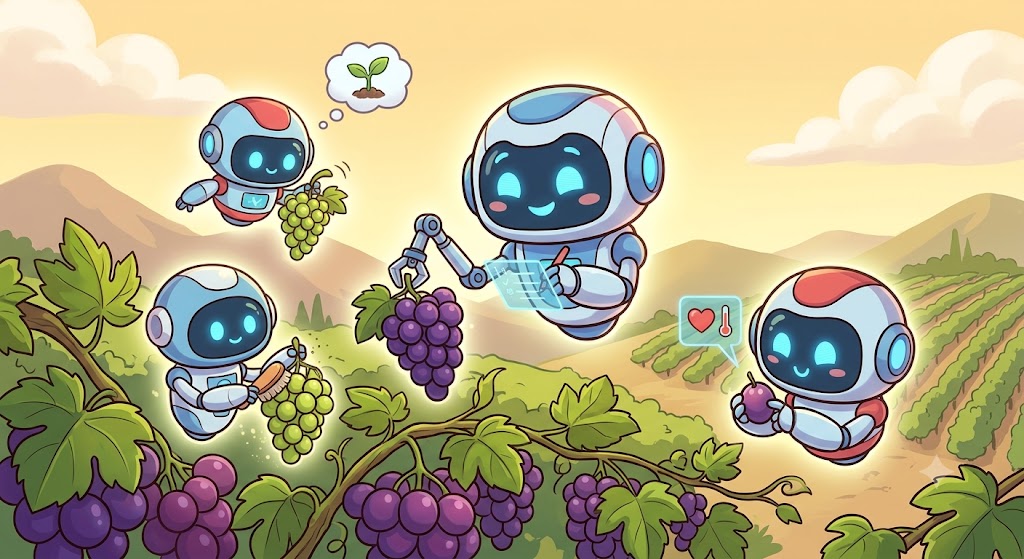
The Modern Winery:
How Automation and AI Are Transforming Wine Operations
The wine industry has always balanced tradition with innovation. While the art of winemaking remains rooted in centuries of craftsmanship, today’s most successful wineries are increasingly leveraging automation, artificial intelligence, and data-driven decision making to improve quality, reduce waste, and strengthen customer relationships.
From the vineyard to the tasting room, technology is creating opportunities to operate more efficiently while enhancing the experience that customers expect from premium wine brands.
In the Vineyard: Sensors, Drones, and Predictive Insights
The vineyard is where every great bottle begins, and it is also where technology can create some of the highest returns on investment.
Modern vineyard sensors continuously monitor soil moisture, temperature, humidity, leaf wetness, and other environmental factors. Rather than relying solely on scheduled inspections, vineyard managers can receive real-time alerts when conditions change, allowing them to respond before issues become costly problems.
Drones add another layer of visibility. Equipped with high-resolution and multispectral imaging, drones can identify irrigation issues, disease pressure, nutrient deficiencies, and vine stress long before these conditions are visible from the ground. Instead of walking hundreds of acres searching for problems, vineyard managers can focus attention precisely where intervention is needed.
Artificial intelligence takes this data one step further. By analyzing weather forecasts, historical vineyard performance, and sensor inputs, AI systems can help predict irrigation requirements, disease risks, and harvest timing. The result is improved grape quality, more efficient use of water and chemicals, and better labor utilization throughout the growing season.
For wineries facing increasing labor costs and environmental challenges, technology is becoming less of a luxury and more of a competitive necessity.
In the Winery: Time, Temperature, Chemistry, and AI
Once grapes arrive at the winery, consistency becomes critical.
Fermentation is a complex biological process where small variations in temperature, sugar levels, acidity, and timing can significantly impact the final product. Modern automation systems continuously monitor these variables and can make adjustments automatically or alert winemakers when intervention is required.
Temperature control systems now provide minute-by-minute monitoring throughout fermentation and storage. Automated pumps, valves, and tank management systems help ensure that production processes occur precisely as intended.
Artificial intelligence is also beginning to play a larger role in winery operations. By analyzing years of production data, AI can identify patterns that might otherwise go unnoticed. Winemakers can use these insights to optimize fermentation profiles, improve blending decisions, and better predict production outcomes.
Advanced single unit sensors and testing systems can rapidly analyze chemistry data and compare current results against historical vintages, helping teams maintain consistency while reducing manual effort.
Keep in mind, AI does not replace the winemaker’s expertise. Instead, it acts as a force multiplier—providing better information, faster analysis, and greater confidence in decision making. The artistry remains human; the data becomes smarter.
The Wine Club and Tasting Room: Managing Clients and Eliminating Overages
For many wineries, the most valuable asset is not the vineyard or the production facility—it is the customer relationship.
Wine clubs, allocation programs, and tasting room memberships create recurring revenue and long-term loyalty. However, managing these relationships manually often leads to inefficiencies, missed opportunities, and costly inventory mistakes.
Customer relationship management platforms integrated with AI can track purchase history, tasting preferences, visit frequency, club status, and engagement patterns. This allows wineries to personalize communications, recommend wines more effectively, and create more meaningful customer experiences.
AI can also help forecast demand with surprising accuracy. Rather than overproducing or underestimating club allocations, wineries can use predictive models to estimate future purchases, shipment volumes, and inventory requirements.
One of the most common operational challenges is managing overages and inventory discrepancies. Automated inventory systems connected to point-of-sale platforms, wine club software, and warehouse management systems provide real-time visibility into available inventory. This significantly reduces allocation errors, shipping surprises, and last-minute inventory shortages.
In the tasting room, automation can streamline reservations, club sign-ups, event registrations, and customer follow-up communications. Staff spend less time managing paperwork and more time creating memorable guest experiences.
Looking Ahead
The wineries that thrive in the coming decade will not be those that abandon tradition. They will be the ones that combine generations of winemaking expertise with modern tools that improve visibility, efficiency, and customer engagement.
Automation and AI are no longer technologies reserved for large corporations. They are becoming practical, accessible tools that help wineries make better decisions, reduce costs, and deliver exceptional experiences from vine to glass.
The future of wine will still be built on craftsmanship. It will simply be supported by better data.
Are You Ready To AI Enhance Your Business?
AI isn’t a human replacement but rather an enhancement to human performance. Are you ready to see how AI can enhance your business?
